Gold Coin Melt Value Calculator: Eagles, Krugerrands & More
 By Sukie Gao · June 30, 2026
A gold coin melt value calculator answers one question: what is the gold inside this coin worth if you ignore everything else about it — the design, the date, the mint mark, the collector market? That "if" is doing heavy lifting, and we'll come back to it, because some coins are worth multiples of their melt value and finding that out *after* selling to a scrap buyer is an expensive education. But melt is the floor under every gold coin ever struck, and knowing your floor is where smart coin selling starts. The math has one trap that catches nearly everyone: melt value runs on a coin's *gold content*, not its gross weight. A 1-ounce American Gold Eagle actually weighs 33.93 grams — more than a troy ounce — because it's 22-karat gold alloyed with silver and copper for durability. Its melt value comes from the 31.103 grams of pure gold inside, not the 33.93 grams on the scale. The calculator above handles this cleanly: enter the coin's gross weight and its karat, and it isolates the gold for you. Below, the exact specs for every major bullion coin, the melt figures, and the three warnings that should precede any coin sale.
Gold Content, Not Gross Weight: The One Rule of Coin Melt Math
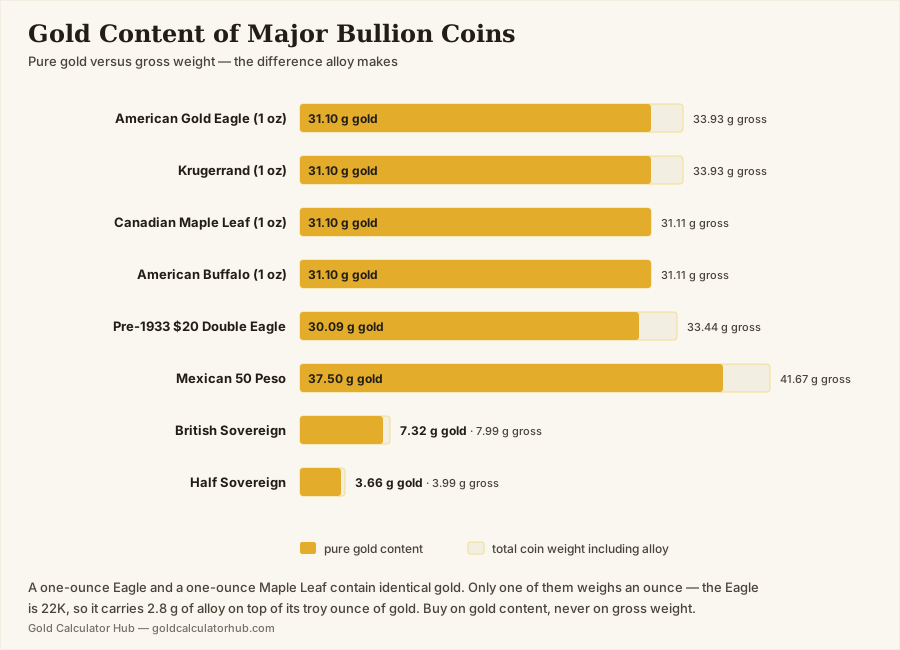
Put a Krugerrand on a scale and it reads 33.93 grams. Multiply that by a pure-gold price and you'll overvalue the coin by about 9% — because a Krugerrand is 91.67% gold (22 karat), with copper making up the balance. The actual gold inside is 33.93 × 0.9167 = 31.10 grams: exactly one troy ounce, which is the entire point of the design. South Africa, and later the US with the Gold Eagle, chose to *add* alloy on top of a full ounce of gold rather than shave the gold down, so the coin wears well in handling while still containing precisely 1.000 troy ounce of fine gold.
Compare the two coin families:
Alloyed bullion (22K): American Gold Eagle, Krugerrand, pre-1933 US gold. Gross weight exceeds gold content. Durable, slightly duller in color.
Pure bullion (.9999): American Gold Buffalo, Canadian Maple Leaf, most modern world bullion. Gross weight ≈ gold content. Softer, scratches and rim-dings more easily.
For melt purposes the families converge: a 1 oz Eagle and a 1 oz Buffalo contain the same troy ounce of gold and carry the same melt value, down to the cent. If you're new to troy measurement — 1 troy oz = 31.103 g, about 10% heavier than the kitchen ounce — the difference matters enough that we wrote it up separately at troy ounce vs ounce.
The Major Bullion Coins: Specs That Matter
These are the published specifications for the coins you're most likely to be holding. The US figures match the US Mint's published bullion specifications; world-coin figures come from their respective mints.
| Coin | Gross weight | Fineness | Fine gold content |
|---|---|---|---|
| American Gold Eagle (1 oz) | 33.93 g | .9167 (22K) | 1.0000 ozt (31.103 g) |
| American Gold Buffalo (1 oz) | 31.108 g | .9999 (24K) | 1.0000 ozt |
| South African Krugerrand (1 oz) | 33.93 g | .9167 (22K) | 1.0000 ozt |
| Canadian Maple Leaf (1 oz) | 31.10 g | .9999 (24K) | 1.0000 ozt |
| $20 Double Eagle (pre-1933) | 33.436 g | .900 (21.6K) | 0.9675 ozt (30.09 g) |
| $10 Liberty/Indian Eagle (pre-1933) | 16.718 g | .900 (21.6K) | 0.48375 ozt |
| British Sovereign | 7.988 g | .9167 (22K) | 0.2354 ozt (7.32 g) |
Two details worth flagging. The pre-1933 US coins were struck at .900 fine — the old circulating standard — so a $20 Double Eagle contains slightly *less* than a full ounce of gold despite weighing more than one. And the little British Sovereign, struck for over two centuries, carries 7.32 grams of fine gold, which makes it one of the most widely traded small gold coins on earth.
Melt Values at a Glance
Apply a price to the contents. Assume gold at $4,400 per troy ounce for clean math — recent prices have run in the $4,300–$4,500 neighborhood, and the calculator above always uses the live figure:
| Coin | Fine gold (ozt) | Melt value at $4,400/ozt |
|---|---|---|
| Any 1 oz bullion coin (Eagle, Buffalo, Krugerrand, Maple) | 1.0000 | $4,400 |
| 1/2 oz Gold Eagle | 0.5000 | $2,200 |
| 1/4 oz Gold Eagle | 0.2500 | $1,100 |
| 1/10 oz Gold Eagle | 0.1000 | $440 |
| $20 Double Eagle | 0.9675 | $4,257 |
| $10 Liberty/Indian Eagle | 0.48375 | $2,129 |
| British Sovereign | 0.2354 | $1,036 |
The pattern to internalize: every 1-ounce bullion coin melts identically regardless of what's stamped on it, because melt value is blind to nationality and design. A scuffed Krugerrand and a gleaming Buffalo are the same troy ounce. Where the coins *diverge* is in the premiums above melt that buyers and sellers attach — which is the subject of the next two sections, and where the real money gets made or lost.
Using the Calculator Above on Any Coin
The calculator takes a karat and a weight — which is everything a gold coin melt value calculator needs once you know the conversion trick.
For 22K coins (Eagle, Krugerrand, Sovereign): enter the coin's gross weight and select 22K. An Eagle at 33.93 g × 91.67% purity isolates 31.10 g of fine gold — the correct troy ounce. Worked in full at $4,400/oz: pure gold runs $4,400 ÷ 31.103 = $141.46 per gram, so 33.93 g × 0.9167 × $141.46 ≈ $4,400. The math closes the loop exactly.
For .9999 coins (Buffalo, Maple Leaf): enter the gross weight and select 24K. A Buffalo at 31.108 g comes out a few dollars under the headline spot figure because 24K is 99.9% rather than a clean 100% — a rounding-level difference.
For .900 pre-1933 coins: there's no 21.6K button, so go direct: multiply the fine gold content from the table above by the current per-ounce price. A Double Eagle is always 0.9675 × spot — at $4,400, that's $4,257.
One practical note on weighing: bullion coins are struck to tight tolerances, so the published gross weight is more reliable than a kitchen scale. Use the spec weight unless you suspect the coin isn't genuine — and if you do suspect that, weight and dimensions checked together are exactly how fakes get caught, since tungsten and other substitute metals can't match gold's density at the correct diameter and thickness.
The Numismatic Warning: Some Coins Are Worth Far More Than Melt
Here is the most expensive mistake in this entire topic, and it's worth more than every table above combined: never sell a pre-1933 gold coin at melt value before checking its collector value.
Bullion coins minted from the 1960s onward — Krugerrands, Eagles, Maples, Buffalos — are commodity products. Hundreds of millions exist, and with rare exceptions their value is melt plus a modest premium. But pre-1933 US gold coins, early sovereigns, and other vintage gold are *numismatic* objects. Their value depends on date, mint mark, and condition, and the spread is enormous: a common-date $20 Double Eagle in worn condition trades near its $4,257 melt, while scarce dates, low-mintage mint marks, or high-grade examples of the same design can bring several times melt — occasionally much more.
The danger scenario is inherited coins. A box from a grandparent's closet gets carried to a scrap buyer, weighed, and paid out at gold value, and nobody in the transaction checks whether one of those Double Eagles had a Carson City mint mark. The scrap buyer may not even know — and no gold coin melt value calculator can see a mint mark.
The defense is cheap: before selling any gold coin dated before about 1935, look up the date and mint mark in a current price guide, and for anything that looks promising, get an opinion from a coin dealer or a grading service — not from the person offering to buy it by weight. Ten minutes of checking protects you from the one mistake in gold selling that can never be undone. For valuing whole mixed inheritances, jewelry included, see selling inherited gold jewelry.
Bullion Premiums: What Coins Cost and Fetch Above Melt
In a normal market, no gold coin changes hands at exactly melt. Buyers pay melt *plus* a premium; sellers receive melt *minus* a smaller haircut (or occasionally a hair above it). The gap between those two numbers is the dealer's spread, and understanding it sets honest expectations on both sides of the trade.
On the buying side, premiums over melt cover minting, distribution, and the dealer's margin. They expand when retail demand spikes and contract when it cools. Recognizability earns a coin tighter pricing: Eagles, Maples, and Krugerrands trade with the leanest spreads precisely because every dealer on earth can verify them at a glance.
Fractional coins are the premium trap worth knowing about. A 1/10 oz Eagle contains exactly one-tenth the gold of the full ounce, but it does *not* cost one-tenth the price — minting and handling costs don't scale down with size, so fractional premiums run meaningfully higher per ounce of contained gold. That's a real cost if you're accumulating gold, and a modest bonus if you're selling fractionals into a strong retail market, since some of that premium survives resale.
When you're deciding whether a quoted price is fair, the melt figure from the gold calculator is your fixed reference point: a quote is never evaluated against another quote, only against melt. For the deeper math on melt itself, the gold melt calculator page walks through the formula for any object, coin or otherwise.
Selling Coins vs. Selling Jewelry: Why Coins Get the Better Deal
If you've read our scrap-selling pages, you know the standard payout bands: online refiners run 70–90% of melt, coin and bullion dealers 65–85%, jewelry stores 50–75%, pawn shops 40–60%. Here's the good news for coin holders: recognized bullion coins routinely beat all of those bands, with dealers commonly paying 95–100% of spot — sometimes a touch over for in-demand issues.
The reason is structural, not generosity. Scrap jewelry is a manufacturing input: it must be tested piece by piece, melted, refined, and re-cast before anyone can resell it, and every step costs money that comes out of your payout. A Gold Eagle requires none of that. Its weight and fineness are guaranteed by the US Mint, verification takes seconds, and the dealer's exit is instant — straight into the display case or to another buyer at full bullion pricing. No refining loss, no assay cost, no waiting. The dealer's risk is near zero, so the spread is near zero.
The practical consequences: first, never sell bullion coins to a generic "cash for gold" operation that prices everything as scrap — you'd be donating 10–30% of your coins' value to cover refining they don't need. Second, get quotes from actual coin and bullion dealers, where competition lives at the 95%+ level. Third, if you hold both coins and scrap jewelry, sell them through different channels; the best buyer for one is rarely the best buyer for the other. The complete venue ranking is at where to sell gold.
Frequently Asked Questions
What is the melt value of a 1 oz American Gold Eagle?
Exactly one troy ounce of gold — so the melt value equals the current spot price. At an assumed $4,400 per troy ounce, that's $4,400. The coin's gross weight is 33.93 grams because it's 22K (91.67% pure), but the alloy was added on top of a full ounce of gold, not subtracted from it: 33.93 g × 0.9167 = 31.10 g of fine gold. In practice, Eagles sell to dealers at or very near full spot because no refining is needed.
Are Krugerrands pure gold?
No — Krugerrands are 22 karat: 91.67% gold, with the balance copper, which gives them their slightly reddish tone and excellent durability. But each 1 oz Krugerrand still contains exactly one troy ounce (31.103 g) of fine gold, because the coin's gross weight of 33.93 grams includes the copper on top of the full gold content. Its melt value is therefore identical to a .9999 fine coin like the Gold Buffalo or Maple Leaf.
How much gold is in a $20 Double Eagle?
A pre-1933 $20 Double Eagle contains 0.9675 troy ounces of fine gold — 30.09 grams — from a gross weight of 33.436 grams at .900 fineness. At an assumed $4,400 per ounce, that's a melt value of about $4,257. But check the date and mint mark before selling at melt: common circulated dates trade near gold value, while scarce dates and mint marks carry numismatic premiums that can run to multiples of melt.
Should I ever actually melt gold coins?
Almost never. "Melt value" is a pricing floor, not a recommendation — recognized bullion coins sell at 95–100% of spot precisely because they're intact and verifiable, and melting one converts a liquid, premium-bearing asset into anonymous scrap that buyers discount for refining. Melting a numismatic coin is worse still: it permanently destroys any collector value. The only gold that genuinely belongs in a crucible is damaged jewelry and true scrap, and even that is the refiner's job, not yours.
Why do dealers pay more for gold coins than for gold jewelry?
Because coins eliminate the dealer's two biggest costs: verification and refining. A bullion coin's weight and purity are guaranteed by a government mint and can be confirmed in seconds, then resold immediately at full bullion pricing. Scrap jewelry must be acid- or XRF-tested piece by piece, then melted and refined before it's sellable, and those costs come out of your payout. That's why coins fetch 95–100% of spot while scrap jewelry tops out around 90% even at the best refiners.
What premium over melt should I expect when buying gold coins?
It varies with the coin and the market mood. Recognized 1 oz bullion coins typically carry the smallest premiums over spot; fractional coins (1/2, 1/4, 1/10 oz) cost noticeably more per ounce of contained gold because minting costs don't shrink with coin size; and premiums across the board widen when retail demand surges. There's no universal number worth quoting — compare the dealer's ask against the live melt value and shop two or three sellers before paying.
Are fractional gold coins worth buying or selling?
They trade exactly like their big siblings, just with higher per-ounce premiums in both directions. A 1/10 oz Eagle holds precisely 0.1 ozt of gold ($440 at an assumed $4,400 spot) but costs more than a tenth of a full ounce to buy. If you're accumulating maximum gold per dollar, full ounces win. Fractionals earn their keep through flexibility — you can sell a small slice of your holdings without breaking a full coin — and when selling into strong retail demand, part of that premium often comes back to you.
How do I know if my old gold coin is worth more than melt?
Three things drive value above gold content: date, mint mark, and condition. Look up your coin's exact date and mint mark (a small letter near the design — CC, D, S, O on US coins) in a current coin price guide, and compare guide prices for various grades against the melt value. If the guide shows common-date prices near melt, melt is your answer. If your date or mint mark shows a meaningful premium in any grade, take the coin to a reputable coin dealer or grading service before selling it anywhere by weight.
Is it legal to melt US gold coins?
Yes. The federal melting prohibition applies to pennies and nickels, whose metal content has at times exceeded face value — not to gold or silver coinage. So melting a Gold Eagle is legal; it's just almost always a bad trade, since intact bullion coins sell at or near full spot while anonymous melted gold gets scrap pricing and needs assay before anyone will pay properly for it. Legal and sensible are different questions, and for gold coins they usually have opposite answers.

Written by Sukie Gao
Sukie Gao holds a master's degree from a business school, where she picked up the markets-and-pricing toolkit she now applies to the consumer gold trade. She created Gold Calculator Hub to give people an independent, data-driven way to find out what their gold is really worth.
Published June 30, 2026