Selling Gold: What Buyers Pay and How Not to Get Lowballed
 By Sukie Gao · September 5, 2026
Selling gold goes wrong in a very particular way. Nobody lies to you. A person behind a counter weighs your jewelry on a real scale, does real arithmetic, and hands you a real number — and the number is thirty or forty percent below what the same pile would fetch three doors down. Nothing illegal happened. You simply walked in without the one piece of information that would have let you tell the difference.
That piece of information is melt value: what the gold in your items is worth at today's market price. It takes sixty seconds to work out and it converts every offer from an opinion into a percentage. "Four hundred dollars for the lot" means nothing on its own. "Four hundred dollars, which is 52% of melt" means you are being quoted pawn-shop rates by a jewelry store, and you should keep walking.
The eight guides below cover the whole sequence — what each buyer type pays and why, how to price inherited pieces, what pawn shops really offer, the tactics used on people who look uncertain, and what to say at the counter. Start with the numbers.
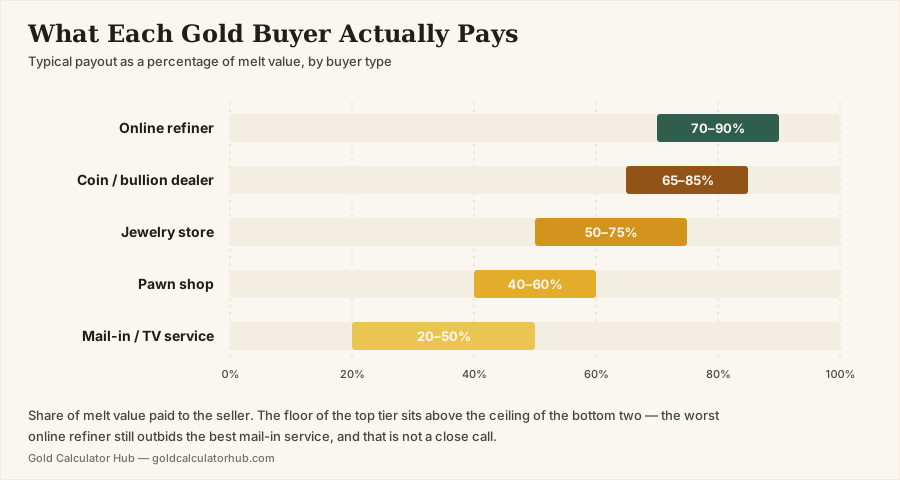
The Payout Ladder, in One Table
Every figure below is a percentage of melt value — the market worth of your item's gold content. That is the only fair benchmark, because it is the one number that does not depend on anybody's opinion.
| Buyer | Typical payout | Speed | Best suited to |
|---|---|---|---|
| Online refiner | 70–90% | 3–10 days | Any lot worth a few hundred dollars or more |
| Coin / bullion dealer | 65–85% | Same day | Coins, bars, larger scrap lots |
| Jewelry store | 50–75% | Same day | Resale-grade or designer pieces |
| Pawn shop | 40–60% | Under an hour | Speed, or buying the item back later |
| Mail-in / TV service | 20–50% | 1–3 weeks | Essentially nothing |
Read the table twice. The *floor* of the top tier sits above the *ceiling* of the bottom two — a merely average refiner beats a good mail-in service, and it is not close. And notice what is missing: 100%. No buyer pays melt. The gap is how they stay in business, and a buyer advertising that they pay full market value is measuring against something other than what you are.
The ranges overlap deliberately, because they should. A motivated local dealer can beat a mediocre refiner. A jeweler who wants your piece for resale rather than scrap can beat both, since they are pricing the object rather than the metal.
Where the Missing Money Actually Goes
The spread is not pure profit, and understanding the cost stack tells you which quotes have room to move.
Between your jewelry box and the spot price sit: assay (confirming what the alloy really is), refining (separating gold from copper, silver and zinc, which has a real per-lot cost), loss in process, insured shipping and handling, the buyer's capital being tied up while the lot accumulates to a refinable size, and finally margin. A refiner running large volumes spreads most of those costs thin and can pay 85%. A pawn shop buying one chain has all of the same costs on a single small lot, plus retail rent, plus the risk that they misjudged the karat.
This is why the ladder is shaped the way it is, and it has a practical consequence: larger lots earn better percentages. Ten grams of scrap will fetch a worse rate than three hundred grams almost anywhere, because the fixed costs do not shrink. If you are selling a small amount, the honest advice is that your percentage will be at the low end regardless of who you choose, and the convenience of a local sale may genuinely be worth the few dollars it costs you.
It also tells you where negotiation works. A pawn shop's opening offer is a negotiating position and often has 10–20% of headroom. A published refiner rate is a price list and does not.
The FTC's own consumer guidance on selling gold jewelry covers the same ground from the regulator's side, and IRS Topic 409 sets out how gains on collectibles — which is how physical gold is classified — are taxed.
The Four Tactics Worth Recognising
None of these are rare, and all four are defeated by arriving with a melt figure.
The lot price. Your items are weighed together and you are quoted one dollar figure for everything. It is fast, it feels decisive, and it makes per-gram comparison impossible. Ask for the weight and the per-gram rate. A buyer who will not give you both is telling you something.
Karat downgrade. Mixed jewelry gets weighed as a single pile and paid at the lowest karat present — your 18K bracelet is bought at 10K rates because it sat next to a 10K ring. Separate your items by karat before you go, and ask for each group to be weighed separately.
The unstated ounce. A quote given "per ounce" that turns out to mean the avoirdupois ounce rather than the troy ounce is a quiet 9.7% haircut. Always confirm which ounce, or insist on grams.
Urgency framing. "This price is only good today" and "gold is about to drop" both exploit the fact that you cannot verify either claim in the moment. Gold moves a percent or two in a normal week. The spread between buyers is twenty to forty. Never let a claim about the market rush a decision that is actually about the buyer.
A Script That Works
You do not need to be adversarial. You need to be specific, which does most of the work by itself.
"I have 42 grams of 14K and 18 grams of 10K, weighed separately. Melt on that is about $2,180 at today's spot. What percentage of melt are you offering, and can you weigh each karat group separately in front of me?"
What that sentence accomplishes: it establishes that you know your weights and karats, it names melt value as the benchmark, it asks for a percentage rather than a dollar figure, and it requests separate weighing without accusing anyone of anything. In most shops the offer that follows is materially better than the one you would have received otherwise — not because the buyer was dishonest, but because the opening number is calibrated to how informed the seller appears.
Then do the genuinely important part: get three quotes, across different buyer types. Not three pawn shops. One refiner, one local dealer, one jeweler. That single habit is worth more than every other tip on this page combined.
The Selling Guides
Guides covering payout rates, specific buyer types, inherited pieces, and the tactics used at the counter.
- How Much Below Spot to Sell Gold Is Fair?How far below spot is fair, and the point at which an offer stops being reasonable.
- What Percentage Do Gold Buyers Pay? Real RangesThe five payout tiers in detail, and why each buyer can pay what they pay.
- Pawn Shop Gold Calculator: Estimate a Realistic Pawn OfferEstimate a realistic pawn offer before you walk in the door.
- Cash for Gold Calculator: What You'll Actually Get PaidWhat a cash-for-gold operation will hand you, versus what your gold is worth.
- Where to Sell Gold: Every Buyer Ranked by Real PayoutEvery buyer type ranked by what they actually pay, with the reasoning behind each band.
- Selling Inherited Gold Jewelry: Values, Taxes, and TimingValuation, US tax basis, and the timing questions specific to inherited pieces.
- Sell Gold Online or Locally? Payouts Compared HonestlyOnline refiners versus local buyers, with the shipping and insurance details that decide it.
- How Much Is My Gold Worth? Work It Out in 60 SecondsThe sixty-second version: weigh, confirm karat, calculate, compare.
- How Much Do Pawn Shops Pay for Gold? Real NumbersReal pawn payout numbers, and when a pawn shop is genuinely the right call.
- Cash for Gold Scams: The Tactics and How to Beat ThemThe specific tactics — lot pricing, karat downgrade, the unstated ounce — and how to shut each one down.
Before You Sell Anything, Two Checks
Is it worth more intact? Melt value is a floor, not a verdict. Signed pieces, period jewelry, recognisable designer work, and scarce-date coins can be worth multiples of their metal. A piece that is merely old is usually not, but a piece that is old *and* marked deserves twenty minutes of research or one appraisal before it goes on a scale. Gold that has been melted cannot be recovered as an object.
Are you selling for the right reason? Nobody times the gold market reliably. What you can control is the spread you give away and whether you regret the sale later. If the sale is driven by a hard deadline, the pawn ladder exists for exactly that and there is no shame in using it — just go in knowing you are paying 40–50% of melt for speed, and that the number is the price of the deadline rather than the price of your gold.
For anything valuable, contested, or part of an estate, talk to a certified appraiser first. That is a genuinely different service from a buyer's free "evaluation," and the difference is who they work for.
Questions About Selling Gold
What percentage of melt value is a fair offer for selling gold?
For a lot of a few hundred dollars or more, 70–85% of melt is the fair band and 80%+ is good. Below 60% you are being quoted pawn rates and should get other quotes unless you need the money today. Below 40%, walk. The exception is very small lots — under about 10 grams — where fixed handling costs genuinely squeeze the percentage for every buyer, and 60% may be the honest market rate rather than a lowball.
Should I sell gold online or locally?
Online refiners pay the best rates because they run volume and skip retail overhead, so for a lot worth several hundred dollars or more they usually win by a clear margin. The tradeoffs are time (3–10 days) and the need to ship insured. Local sales win when the amount is small enough that the percentage difference is a few dollars, when you want cash today, or when the piece may be worth more intact than melted — a judgment a local jeweler can make with the item in hand.
Do I pay tax when I sell gold?
In the US, physical gold is treated as a collectible by the IRS, and gains are taxable — reported on Schedule D, with a maximum long-term collectibles rate of 28% rather than the usual long-term capital gains rates. Your gain is measured against your cost basis; for inherited gold, the basis is generally the fair market value on the date of the previous owner's death, which often means little or no taxable gain on a prompt sale. This is general information rather than tax advice, and the inherited-gold guide goes into it properly. Confirm your own situation with a tax professional.
How do I stop a buyer from paying me the lowest karat rate for a mixed pile?
Separate the items by karat yourself before you arrive, using the hallmarks, and put each group in its own bag. Then ask for each bag to be weighed and quoted separately, in front of you. Buyers who weigh everything together and quote one number are — deliberately or not — paying you 10K rates on your 18K, and the difference on a mixed jewelry box is routinely a couple of hundred dollars.
Is it worth getting an appraisal before selling gold?
For plain scrap — broken chain, single earrings, bent rings with no marks — no. The melt calculation is the answer and an appraisal costs more than it reveals. For anything signed, antique, set with meaningful stones, or part of an estate being divided, yes, and use a certified appraiser who charges a flat fee rather than a buyer offering a free evaluation. The two have different incentives and it shows in the numbers.
Is there any way to get spot price for my gold?
Essentially never, and the reason is structural rather than unfair. Spot is the price for large lots of already-refined, assayed, deliverable gold held in a recognised vault. Your chain is none of those things yet — it has to be tested, refined, and turned into that form, and each step costs money that comes out of the gap. The closest ordinary sellers get to spot is recognised bullion: a stamped bar or a common bullion coin from a known mint can trade within a few percent of spot, occasionally slightly above it, because the assay and refining work is already done and the buyer can resell it as-is.

Written by Sukie Gao
Sukie Gao holds a master's degree from a business school, where she picked up the markets-and-pricing toolkit she now applies to the consumer gold trade. She created Gold Calculator Hub to give people an independent, data-driven way to find out what their gold is really worth.
Published September 5, 2026