What Percentage Do Gold Buyers Pay? Real Ranges
 By Sukie Gao · August 29, 2026
What percentage do gold buyers pay? Almost nobody will tell you, which is exactly why the question deserves a page of its own. Walk into five different businesses with the same chain and you will get five offers, each presented as a dollar figure, none presented as a percentage of anything. That framing is not an accident. A dollar figure invites you to decide whether it feels like a lot. A percentage invites you to compare — and comparison is the one thing a buyer standing between you and the market would rather you skip.
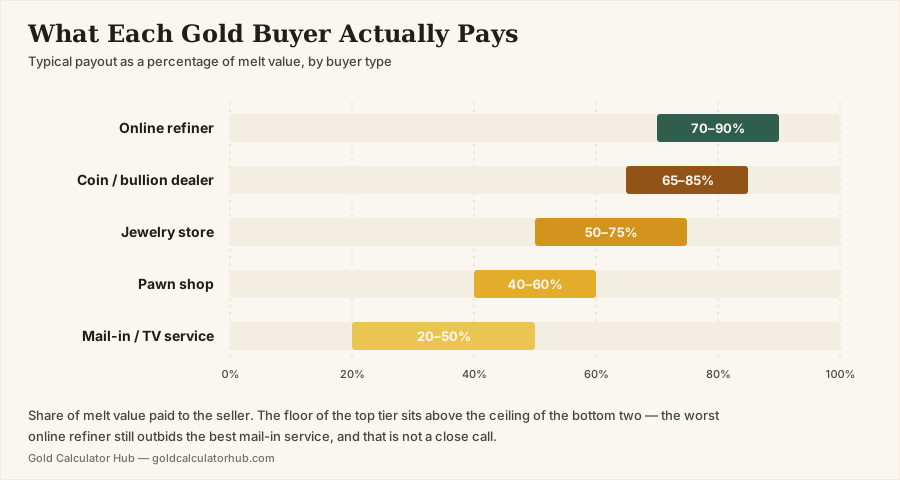
So here are the numbers, stated plainly and up front: online refiners typically pay 70–90% of melt value, local coin and bullion dealers 65–85%, jewelry stores 50–75%, pawn shops 40–60%, and mail-in or TV cash-for-gold operations 20–50%. Those bands are the spine of this page.
But the bands alone aren't the useful part. What's useful is understanding *why* a refiner can pay 85% and a mail-in service can't get near it — because the reasons are structural, predictable, and they tell you exactly which quotes are negotiable and which are already at the edge. We'll walk the cost stack that sits between your jewelry box and the spot price, go through each buyer type one at a time, and then quote a single real chain at all five counters so you can see the spread in dollars instead of percentages. Start by knowing your melt value: the gold calculator gives it to you in under a minute.
The Five Tiers, Stated Plainly
Every payout on this page is expressed as a percentage of melt value — the market worth of the gold content in your item, calculated from the current spot price, the item's weight, and its purity. That's the only sensible benchmark, because it's the one number that doesn't depend on anyone's opinion.
| Buyer type | Typical payout (% of melt) | Speed | Best for |
|---|---|---|---|
| Online refiner | 70–90% | 3–10 days | Any lot over a few hundred dollars of melt |
| Coin / bullion dealer | 65–85% | Same day | Bullion, coins, larger scrap lots |
| Jewelry store | 50–75% | Same day | Resale-grade pieces, designer work |
| Pawn shop | 40–60% | Under an hour | Speed, or getting the item back later |
| Mail-in / TV service | 20–50% | 1–3 weeks | Essentially nothing |
Two things stand out. First, the ranges overlap: a strong local dealer can beat a mediocre refiner, and a jeweler who wants to resell your piece intact can beat both. Second, the *floor* of the top tier is above the *ceiling* of the bottom two. A bad refiner outbids a good mail-in service. That's not a close call, and it's the single most actionable fact on this page.
Also note what's absent from the table: 100%. No buyer pays melt value. Anyone advertising that they do is either measuring against a different benchmark than you are, or planning to make it back somewhere you're not looking.
A Percentage of What, Exactly?
Before comparing anything, pin down the denominator. "We pay 90%" is a meaningless sentence until you know 90% of what, and there are at least three plausible answers floating around.
Percent of melt value. The honest benchmark, and the one used throughout this page. Melt value is your item's actual gold content valued at spot. It's computable, verifiable, and identical no matter who's doing the math.
Percent of spot. Sounds similar, means something very different. If a buyer quotes "90% of spot" on a 14K chain and applies that 90% to the *pure gold* price without adjusting for purity, they're describing melt. If they apply it to the gross weight, they've just paid you 90% of a number that's 71% too high — in your favor, which is why nobody does it. In practice "percent of spot" quotes usually resolve to percent of melt, but ask.
Percent of retail. The jewelry-store version. A store that plans to resell your ring in its case may quote against what it expects to sell it for, not against the metal. This can genuinely be more money than melt — a signed piece in good condition sometimes is — but it's a different transaction with a different logic, and the percentage isn't comparable to a scrap quote.
The defense is simple and it works: compute your melt value before you shop the item, then convert every offer you receive into a percentage of *your* number. Two quotes of "$1,400" and "$1,150" are just two numbers. Sixty-four percent and fifty-three percent of melt is a decision.
The Cost Stack Between Your Chain and the Spot Price
What percentage do gold buyers pay is really a question about costs. Nobody pays 100% of melt, because a used chain is not exchange-deliverable gold. Between the two sits a stack of real costs, and every buyer tier is really just a different arrangement of them.
Assay and refining. Scrap has to be melted, homogenized, and assayed before anyone knows precisely what's in it. Refiners charge for this — commonly a per-lot refining fee, sometimes an assay charge, and often a minimum lot size below which the fixed costs swamp the metal value. This is the closest thing to a real answer for "how much do gold vendors charge per ounce when you bring gold in": there isn't one flat per-ounce number, there's a fee structure, and smaller lots absorb proportionally more of it.
Purity risk. The buyer pays you before the assay comes back. Stamps get faked, plating gets sold as solid, and mixed lots average lower than they look. That risk is priced into every offer, and it's why clean, hallmarked, single-karat lots draw better percentages than a bag of unknowns.
Price risk and working capital. The buyer's cash leaves today; the refined metal settles weeks later. In between, gold can move against them, and in many states the item legally cannot be resold until a holding period expires. They're financing your payout and carrying the market risk while doing it.
Overhead per transaction. Rent, staff, security, insurance, licensing, police reporting. A storefront that processes ten small gold transactions a day has to cover all of that out of the spread on those ten transactions.
Customer acquisition. The quietest cost and the most decisive one. Free mailer kits, prepaid shipping, mall kiosk rent, television advertising — every dollar spent finding you comes out of the same spread your payout comes from. This single line item explains most of the gap between the top tier and the bottom tier.
Online Refiners: 70–90%
Refiners sit closest to the melt pot, and their economics reflect it. They buy in volume, process continuously, and skip the storefront entirely — no showcase, no walk-in traffic, no retail rent. That structural efficiency is what funds the highest payouts available to an ordinary seller.
The mechanics: you request a kit or print a prepaid label, ship your gold insured, and the refiner tests and weighs it on receipt. Reputable operations photograph or video the unpacking, itemize the lot by karat, and present an offer you can accept or decline. Decline, and they return your gold at their cost — that return-shipping guarantee is the single most important thing to verify before mailing anything.
Where within 70–90% you land depends on a few things you control. Larger lots score better because fixed processing costs spread across more metal. Pre-sorting by karat helps, since it reduces the buyer's assay risk. And the top of the range generally goes to sellers who ask for it — refiners quote conservatively to people who don't push back, same as everyone else.
Two cautions. First, the difference between a licensed refiner and a website with a stock photo of a crucible is enormous; check registration, physical address, and how they handle disputed offers. The Commodity Futures Trading Commission's precious metals fraud advisory is a useful primer on what predatory operators look like. Second, mail-in refiners and mail-in "cash for gold" services are not the same business despite using the same envelope — the tier at the bottom of this page also arrives by post. Sell gold online covers how to tell them apart.
Coin and Bullion Dealers: 65–85%
A local coin shop occupies an interesting middle position: retail overhead, but wholesale relationships and genuine expertise. That combination produces payouts a notch below a refiner's and well above everything else — with the enormous advantage that you get paid the same day and never let the item out of your sight.
Dealers shine on two categories in particular.
Bullion and recognizable coins. This is their core trade, and here the percentages stop applying entirely. A dealer buying a one-ounce American Gold Eagle isn't valuing scrap gold — they're buying an instantly resellable product, and their bid will typically sit within a few percent of spot rather than at 70% of it. If your gold is in coin or bar form, a coin dealer is very likely your best venue, full stop.
Larger scrap lots. Volume matters here as much as it does with refiners. A dealer who can add your 200 grams to a shipment they're already sending out will pay noticeably better than one processing your single ring.
Where dealers underperform: small, mixed, low-karat scrap. A 4-gram 10K pile is not interesting to them, and the offer will show it.
The practical advantage of a good local dealer is that you can watch the test happen. Ask them to run each piece separately, show you the scale, and state the buy percentage out loud. Dealers who intend to treat you fairly have no problem with any of that — and the ones who flinch have told you something useful for free.
Jewelry Stores: 50–75%
Jewelry stores are the most variable tier on the list, because two completely different transactions hide behind the same counter.
Scrap buying. Most independent jewelers will buy gold for melt, and their percentage lands in the 50–75% band. They're paying retail rent and carrying retail inventory, and gold buying is a sideline that has to earn its keep against those costs.
Resale buying. If your piece is intact, current in style, and — especially — signed by a recognized maker, a jeweler may want it for the case rather than the crucible. Now they're valuing what they can sell it for, and that can exceed melt value substantially. A designer bracelet worth $2,000 at retail is not going to be bought as $900 of scrap by anyone paying attention.
That second scenario is the reason to take a good piece to a jeweler *before* taking it to a refiner. Melt value is a floor that never expires; the resale premium disappears the moment the piece is melted.
Two things to watch. Jewelers commonly steer sellers toward store credit or a trade-in against a new purchase, and the credit figure will look generous next to the cash figure. That's a discount on their retail margin dressed up as a better price for your gold — sometimes a fine deal if you were buying anyway, never a fair comparison to a cash quote. And a store that buys your 18K band for melt and quietly resells it intact has done nothing wrong, but it's a reminder that they're the ones who can tell the difference. Selling gold online or locally works through when each venue makes sense.
Pawn Shops: 40–60%
Pawn shops pay the least of any legitimate walk-in venue, and the reasons are entirely structural rather than sinister.
A pawn shop is a lending business. Its capital is committed to a loan book, its regulatory burden is heavy — licensing, ID collection, transaction reporting to police, mandatory holding periods in most states — and its per-transaction overhead is high relative to the small lots that come through the door. Buying gold outright is a sideline, and sidelines get priced conservatively.
There's a second number that catches people out. The 40–60% band applies to outright sales. A pawn *loan* is calculated differently and lower: typically 25–50% of what the shop believes it could resell the item for, with interest and fees on top that commonly run 10–25% per month depending on state caps. Pawning is the most expensive way to extract cash from gold unless you redeem it quickly — and it's the only way that lets you get the item back at all, which is occasionally worth every cent.
Where pawn shops genuinely win: speed. Cash in hand in under an hour, no shipping, no waiting, no tracking number. If you need money today, that service has a price and 40–60% is it.
First offers at a pawn counter carry real slack — commonly 10–20%. The way to unlock it is arithmetic, not charm: state your melt value, name their offer as a percentage of it, and ask for a specific better number. How much do pawn shops pay for gold walks through that negotiation in detail.
Mail-In and TV Buyers: 20–50%
This is the tier the rest of the page exists to keep you away from. Twenty to fifty percent of melt is a wide band, and the low end of it is genuinely as bad as it sounds — a third of your gold's value, sometimes less.
The economics are not mysterious. A national cash-for-gold operation spends heavily on television spots, direct mail, free kits, prepaid postage, and brand advertising. Every one of those dollars is recovered from the spread between melt value and what they send you. The more visible the marketing, the less is left over. That's the entire explanation.
Layered on top are the tactics that make this tier notorious:
- Unsolicited check in the mail. You ship the gold, they send a check for whatever they decide. Cashing it is often deemed acceptance.
- Short return windows. Ten days to reject the offer and request your items back, buried in the terms.
- Vague weight and karat reporting. A single total rather than a piece-by-piece breakdown, which makes the offer impossible to check.
- "Free appraisal" framing. The appraisal is free because the appraisal is the sales pitch.
The Federal Trade Commission's guidance on selling gold jewelry is explicit about the defenses: know the weight and karat of every piece before shipping, get more than one offer, and understand the return policy in writing before anything leaves your hands. None of that costs money, and any of it would have prevented most of the complaints this tier generates. Cash for gold scams catalogs the full playbook.
One Chain, Five Counters
Percentages are abstract until they're dollars. So take a single object through all five tiers.
The item: a 26.5-gram 14K curb chain, hallmarked 585, no stones, clasp intact. Assume gold at $4,400 per troy ounce.
- Price per gram of pure gold: $4,400 ÷ 31.103 = $141.46
- Pure gold content: 26.5 g × 0.5833 = 15.46 g
- Melt value: 15.46 × $141.46 = $2,187
Now the same chain, quoted five ways:
| Buyer | Payout band | Offer range | Midpoint |
|---|---|---|---|
| Online refiner | 70–90% | $1,531–$1,968 | $1,749 |
| Coin / bullion dealer | 65–85% | $1,422–$1,859 | $1,640 |
| Jewelry store | 50–75% | $1,093–$1,640 | $1,367 |
| Pawn shop | 40–60% | $875–$1,312 | $1,093 |
| Mail-in / TV service | 20–50% | $437–$1,093 | $765 |
The best plausible outcome is $1,968. The worst is $437. That's a $1,531 swing on one chain, and not a single dollar of it has anything to do with the gold — the metal is identical in every row. It's entirely a function of which door you walked through and whether you knew your melt value when you did.
Compare the realistic midpoints instead of the extremes and the picture is still stark: a refiner at 80% pays $1,749; a mail-in service at 35% pays $765. Same chain, same week, $984 difference. That's the price of not asking one question.
And note the overlap at the edges: a stingy refiner at 70% ($1,531) barely beats a generous jeweler at 75% ($1,640) — in fact, loses to it. Tier is a strong prior, not a guarantee. Getting two or three actual quotes beats assuming.
Does Anybody Ever Pay Market Value?
For scrap jewelry, no — and any buyer claiming otherwise is redefining a word. But the question has a real answer in a different form, and it's worth knowing because it changes what you should do with certain gold.
Bullion trades near spot. A one-ounce American Gold Eagle, a Canadian Maple Leaf, a recognized one-ounce bar: these are assayed, standardized, instantly identifiable products. A dealer buying one isn't taking purity risk or refining risk, so their bid sits close to spot rather than at a scrap percentage. Sometimes above it, when retail demand is strong and supply is tight.
Recognizable pre-1933 US gold and other semi-numismatic coins often carry a premium over melt for the same reason plus collector demand.
Signed and collectible jewelry can exceed melt by multiples in the right market, which is a resale question rather than a metal question.
What all three have in common: the buyer doesn't have to melt anything to resell it. Remove refining from the equation and the percentage climbs immediately. That's the whole mechanism.
The practical implication is that "what percentage do gold buyers pay" is the wrong question for coins and the right question for chains. If you're holding bullion, price it against spot and talk to a coin dealer. If you're holding broken jewelry, price it against melt and shop the percentage. Melt value of gold coins covers the coin side, and how much below spot should you sell gold covers where the realistic scrap lines fall.
Making a Buyer Quote You a Percentage
The single highest-leverage move in selling gold takes about sixty seconds and costs nothing: convert every offer into a percentage of melt, out loud, in front of the person who made it.
Here's the sequence that works.
- Weigh at home. A pocket scale reading to 0.01 g. Sort by karat stamp and weigh each group separately.
- Compute melt. Weight × purity × price per gram of pure gold. Write the number down — on paper or on your phone screen.
- Get the offer first. Don't lead with your number. Let them quote, then do the division.
- Say the percentage. "That's $2,187 of melt and you're offering $1,150 — that's 53%. Can you get to 70%?" Naming a specific target does more than expressing disappointment.
- Be willing to leave. Not as a tactic, as a genuine option. There are four other tiers.
What this accomplishes isn't rhetorical. It changes the category you're in. Buyers price sellers, not just gold — someone holding a computed melt figure is visibly a different customer from someone hoping the number sounds like a lot, and gets quoted accordingly. That's not cynicism about the trade; it's how every trade with asymmetric information works.
Two closing notes. Get more than one offer on anything worth more than a few hundred dollars — the spread between quotes on the same item is routinely wider than anything you'll win by negotiating a single one. And if you're selling inherited gold, there may be tax considerations around cost basis and collectibles treatment; the IRS covers the general rules under topic 409 on capital gains, but this isn't tax advice and a professional is worth the hour. Where to sell gold ranks every venue side by side if you want the full comparison.
Frequently Asked Questions
Do gold buyers ever pay full market value?
Not for scrap jewelry. Every buyer has to cover assay, refining, holding time, price risk, and overhead out of the spread between what they pay you and what the metal is worth, so 100% of melt isn't an offer anyone can make and stay in business. Bullion is the exception: a coin dealer buying a recognized one-ounce coin doesn't need to refine anything, so their bid typically sits within a few percent of spot. The rule is about scrap, not about gold.
How does a cash-for-gold place decide what to pay me?
The same four steps everywhere: test the karat with acid or an electronic tester, weigh it in grams or pennyweight, compute melt value from the current spot price, then multiply by the house buy rate. That last number is the only part that varies by venue — 70–90% at a refiner, 40–60% at a pawn counter, as low as 20% at a mail-in service. The first three steps you can do yourself at home, which turns their offer from a verdict into a percentage you can evaluate.
What do jewelers actually pay for gold?
Typically 50–75% of melt value when buying for scrap, which puts them above pawn shops and below refiners and coin dealers. The important exception is resale-grade jewelry: if a piece is intact, wearable, and especially if it's signed by a recognized maker, a jeweler may value it against what it will sell for in their case rather than against its metal content, and that can be well above melt. Take good pieces to a jeweler before taking them to a refiner.
Why do mail-in gold buyers pay so much less?
Because their marketing is expensive and it comes out of the same money your payout does. Television advertising, free kits, prepaid postage, and national brand campaigns all have to be recovered from the spread between melt value and what they send you. The 20–50% band isn't a pricing decision so much as arithmetic. Note that legitimate online refiners also work by mail and pay 70–90% — the envelope isn't the problem, the advertising budget is.
Is there a percentage below which I should just walk away?
As a practical floor, anything under 50% of melt on a lot worth more than a few hundred dollars deserves a second quote before you accept it, because the next tier up will very likely beat it by hundreds of dollars. Below 40% you're being paid for convenience rather than gold. The exceptions are genuine ones: tiny lots where shipping and fees eat the difference anyway, and situations where you need cash today and the speed is worth the discount.
Does the karat of my gold change the percentage a buyer pays?
Indirectly, yes. Higher-karat and cleanly hallmarked gold carries less purity risk and refines more efficiently, so it often draws the upper end of a buyer's range. Low-karat, mixed, or unmarked scrap draws the lower end, because the buyer is absorbing more uncertainty. Lot size matters even more: fixed processing and shipping costs spread across more metal, so a 200-gram lot reliably earns a better percentage than a single 4-gram ring at the same venue.

Written by Sukie Gao
Sukie Gao holds a master's degree from a business school, where she picked up the markets-and-pricing toolkit she now applies to the consumer gold trade. She created Gold Calculator Hub to give people an independent, data-driven way to find out what their gold is really worth.
Published August 29, 2026