Gold Chain Value Calculator: What Your Chain Is Really Worth
 By Sukie Gao · October 6, 2026
A gold chain value calculator needs two numbers from you and gives back one that settles most arguments: weight in grams and karat, in exchange for melt value. Enter them above and you have the objective worth of the metal in your chain at today's price.
Chains are, in one specific way, the easiest gold item to value — they are almost always solid metal with no stones, no non-gold components beyond a clasp, and a hallmark somewhere near that clasp. Weigh, read the stamp, multiply. Done.
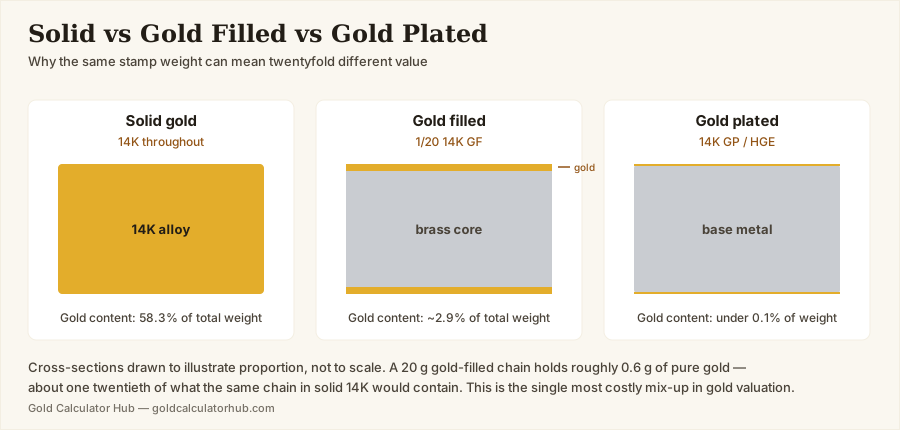
In another way they are the most treacherous, and it is worth naming the trap before anything else. Chains are the single most commonly gold-filled or gold-plated item in circulation. A hollow rope chain and a solid one look identical around a neck and differ tenfold in value. A chain marked "1/20 14K GF" contains about a twentieth of the gold that a solid 14K chain of the same weight contains. Getting the chain into the right category comes before any arithmetic — and this page spends its first sections there for exactly that reason.
First: is it solid, hollow, or filled?
Three categories, wildly different values, and they are not always obvious by eye.
Solid. The links are solid metal throughout. Full melt value applies. Heavy for its size, and it does not dent when you press a link.
Hollow. The links are formed from tube rather than wire — genuinely the marked karat, but with air inside. A hollow 14K rope chain is still 14K gold; there is simply less of it. This is not deception and hollow chains are marked honestly; the value follows the weight, which is the point. A hollow chain that looks like a 40 g solid one might weigh 14 g, and it is worth what 14 g of 14K is worth.
Gold filled or plated. A base-metal core with gold bonded or plated on. Marked GF, 1/20 14K GF, RGP, HGE, GP, or vermeil. Gold content is roughly 5% of weight for gold filled and effectively nil for plated.
The practical distinction: solid and hollow both use this calculator normally, because both are priced on actual weight. Gold filled needs a different calculation entirely. If the mark contains a fraction like 1/20 or the letters GF, GP, RGP or HGE anywhere, stop and switch.
The definitions of "gold filled," "gold plated" and "rolled gold plate" are not marketing terms — they are set in US law by the FTC Jewelry Guides, which specify the minimum gold-to-weight ratios each description requires.
Where the mark hides on a chain
Chain hallmarks are small and almost always in one of three places.
The clasp tag. A tiny flat plate soldered beside the lobster or spring-ring clasp. This is where the majority of chains carry their mark.
The clasp itself. Stamped on the flat face of a lobster clasp, often needing magnification.
The end link or jump ring. Occasionally stamped on the last link before the clasp.
Use a jeweler's loupe or a phone camera at maximum zoom with good light. Marks wear, and a chain worn daily for twenty years may have an illegible one.
One caution specific to chains: the clasp is sometimes a different karat, or a different metal entirely, from the chain body. A 14K chain with a base-metal clasp is common on cheaper pieces. If the clasp is markedly different in colour or feels lighter than the chain, weigh the chain without it where possible, or expect a buyer to discount for it.
Weighing a chain properly
Chains are light and awkward, which makes weighing error proportionally large.
Use a 0.1 g scale. A kitchen scale reading whole grams introduces up to half a gram of error, which on a 6 g chain is 8% of the value. A pocket jewelry scale costs $15–25.
Weigh it coiled in the centre of the platform. A chain hanging over the edge reads low.
Calibrate first. Most pocket scales ship with a calibration weight. Use it — cheap scales drift.
Weigh chains separately by karat. Never pile a 14K chain with a 10K one. You will be paid on the lower assumption.
Typical chain weights, for a sanity check: a delicate 18" cable chain runs 2–4 g; a moderate 20" rope chain 8–15 g; a substantial 24" Cuban link 40–80 g solid, or 15–25 g hollow. If your chain weighs far less than its apparent size suggests, it is probably hollow — which is worth knowing before a buyer tells you.
The calculation, with real chain weights
grams × purity × price per gram of pure gold = melt value
At a pure gold price of $143 per gram:
| Chain | Weight | Karat | Pure gold | Melt value |
|---|---|---|---|---|
| Fine cable, 18" | 3.2 g | 14K | 1.87 g | $267 |
| Rope, 20" | 12.0 g | 14K | 7.00 g | $1,001 |
| Figaro, 22" | 18.5 g | 18K | 13.88 g | $1,984 |
| Cuban link, 24" solid | 62.0 g | 10K | 25.84 g | $3,695 |
| Cuban link, 24" hollow | 21.0 g | 10K | 8.75 g | $1,251 |
| Box chain, 20" | 9.4 g | 22K | 8.62 g | $1,232 |
The last two rows of the Cuban comparison are the lesson: identical-looking chains, same karat, same length, differing by $2,444 because one is hollow. Nobody can tell by looking. The scale can.
Necklaces with pendants, stones or mixed parts
A chain alone is simple. A necklace is often not.
Pendants are frequently a different karat from the chain, and sometimes a different metal. Weigh and value them separately.
Stones must come out of the weight. A pendant set with cubic zirconia weighs more than its gold content, and a buyer will estimate the stone weight downward generously in their own favour. If a stone is meaningful — a real diamond, a decent sapphire — the piece may be worth considerably more intact than melted.
Enhancers, spacers and beads are often base metal or plated even on a solid gold chain.
Clasps and extenders, as noted, may not match.
The general rule: melt value applies only to the gold you can actually account for. When in doubt, assume less gold rather than more, so that a real quote surprises you upward.
When a chain is worth more than its gold
Melt value is the floor, and for most chains it is also roughly the ceiling — chain is a commodity form and there is little design premium in a standard rope or curb link.
The exceptions are real though.
Signed pieces. A chain from a recognised house, with the maker's mark intact, can carry a substantial premium on the secondary market.
Antique chains. Victorian and Edwardian chains — Albert chains, guard chains, muff chains — are collected as objects and often sell for multiples of melt, particularly with original clasps, slides or swivels.
Unusual construction. Hand-woven, hand-assembled or unusual link patterns that are no longer manufactured.
Chains with provenance, or matched to a period pendant.
If a chain is old, unusually made, or signed, spend twenty minutes checking before you weigh it for scrap. Melting is irreversible, and a scrap buyer has no obligation to point out that they are getting a bargain.
What buyers actually pay for chain
Chain is popular scrap because it is easy to test and has no stones to deal with, so payout percentages tend to sit at the better end of the range.
| Buyer | Share of melt |
|---|---|
| Online refiner | 70–90% |
| Coin / bullion dealer | 65–85% |
| Jewelry store | 50–75% |
| Pawn shop | 40–60% |
| Mail-in / TV service | 20–50% |
So the 12 g 14K rope chain above, at $1,001 of melt, realistically fetches $700–$900 from a good refiner, and $400–$600 at a pawn counter.
One chain-specific note: because chains are the most commonly plated item, a buyer who has been burned will sometimes test more sceptically or discount an unmarked chain harder than they would an unmarked ring. Having a clear hallmark, or having tested it yourself, is worth more on a chain than on almost any other item.
Selling a chain versus pawning it
Chains are among the most commonly pawned items, which is worth understanding as a distinct transaction rather than a bad sale.
A pawn loan uses the chain as collateral: you get cash now, pay it back with interest and fees, and get the chain back. The loan amount is typically 25–50% of melt — lower than an outright sale, because the shop is lending against something they may need to resell.
An outright sale to a pawn shop gets you 40–60% of melt and the chain is gone.
If you want the chain back and the interest is affordable, the loan is the right instrument. If you do not, selling to a pawn shop is one of the worst prices available and a refiner will pay substantially more for the same metal. People often default into pawning a chain they never intended to keep, which is the expensive version of both options.
Buying a chain: what to check
The same knowledge works in reverse.
Ask solid or hollow, and get it in writing. The price difference is enormous and the appearance difference is nil. A reputable seller states it plainly.
Check weight against price. A chain priced far below its melt value is either hollow, plated, or not what it claims. Melt value is a hard floor on what solid gold can honestly cost.
Look at the clasp. A cheap clasp on a good chain is a sign of a repaired or assembled piece, and it is also the part most likely to fail.
Understand the markup. New gold chain typically retails at 2–4× melt for machine-made work, more for designer pieces. That covers manufacture, retail margin and design. It is not a scam; it is why buying jewelry as investment rarely works and buying bullion does.
Common chain weights by style and length
Useful for sanity-checking a scale reading or an online listing. All figures are for solid construction in 14K; hollow versions typically run 30–50% of these weights.
| Style | 18" | 20" | 24" |
|---|---|---|---|
| Fine cable (1 mm) | 2–3 g | 2.5–3.5 g | 3–4.5 g |
| Box (2 mm) | 5–7 g | 6–8 g | 7–10 g |
| Rope (3 mm) | 10–14 g | 12–16 g | 14–20 g |
| Figaro (5 mm) | 16–22 g | 18–25 g | 22–30 g |
| Curb (7 mm) | 30–40 g | 34–45 g | 40–55 g |
| Cuban (10 mm) | 55–70 g | 62–80 g | 75–100 g |
These are ranges rather than specifications, because link thickness varies between manufacturers. Use them to spot an implausible claim rather than to replace a scale.
Before you sell: the short checklist
- Find the mark. Clasp tag first, then the clasp, then the end link.
- Rule out gold filled. Any fraction, or GF / GP / RGP / HGE, changes everything.
- Weigh in grams on a 0.1 g scale, coiled, calibrated.
- Separate by karat if you have more than one chain.
- Calculate melt with the tool above.
- Check whether it is worth more intact — signed, antique, or unusual construction.
- Get three quotes across buyer types, and convert each to a percentage of melt.
Step seven is the one that changes the number. Everything before it just makes step seven possible.
Frequently Asked Questions
How do I find out how much my gold chain is worth?
Weigh it in grams on a scale that reads to 0.1 g, find the karat from the hallmark near the clasp, and multiply weight × purity × the current price per gram of pure gold. The calculator above does it with the live price. Before you calculate, check the mark for GF, GP, RGP, HGE or a fraction like 1/20 — those mean gold filled or plated, where the gold content is a small fraction of the weight.
Where is the hallmark on a gold chain?
Usually on a small flat tag soldered beside the clasp, or stamped on the flat face of the clasp itself. Occasionally it is on the final link or jump ring. The marks are tiny — use a loupe or a phone camera at maximum zoom in good light. Marks wear down, so a chain worn daily for decades may have an illegible one, in which case testing is the answer.
Is a hollow gold chain worth less than a solid one?
Yes, proportionally to its weight — but it is not lower quality gold. A hollow 14K chain is genuinely 14K; there is simply less metal in it because the links are formed from tube rather than solid wire. A hollow chain that looks like a 40 g solid one might weigh 14 g and be worth about a third as much. Hollow chains are also more prone to denting and harder to repair, which affects resale beyond just the metal.
How much do pawn shops pay for a gold chain?
Typically 40–60% of melt value for an outright sale, and 25–50% for a pawn loan where you keep the right to redeem it. On a 12 g 14K chain with about $1,000 of melt, that is roughly $400–$600 to sell outright. An online refiner would pay $700–$900 for the same chain. If you do not intend to redeem the piece, the pawn counter is one of the more expensive places to sell it.
What does 1/20 14K GF mean on a chain?
It is gold filled: the gold layer is one twentieth of the item's total weight, and that layer is 14 karat. So a 20 g chain marked this way contains about 1 g of 14K gold, which is roughly 0.58 g of pure gold — around 5% of what a solid 14K chain of the same weight would hold. Gold filled is a real bonded layer and far more substantial than plating, but most refiners will not buy it in small quantities because recovery costs exceed the yield.
Should I sell my gold chain or keep it?
That depends on things a calculator cannot see. Melt value tells you the floor — what the metal is worth today. Worth checking first: is it signed, antique, or unusually constructed? Victorian and Edwardian chains regularly sell for multiples of melt as objects. And melting is irreversible, so a piece you might regret losing deserves more thought than one that has sat broken in a drawer for a decade.
Does the clasp count toward the weight of a gold chain?
If the clasp is the same karat as the chain, yes — it is gold and it counts. But clasps are often a different karat, and on cheaper chains they are sometimes base metal or plated even when the chain is solid gold. A buyer will notice and discount for it. If the clasp is noticeably different in colour or feels light relative to the chain, weigh the chain without it where you can, or expect the estimate to be adjusted down slightly.

Written by Sukie Gao
Sukie Gao holds a master's degree from a business school, where she picked up the markets-and-pricing toolkit she now applies to the consumer gold trade. She created Gold Calculator Hub to give people an independent, data-driven way to find out what their gold is really worth.
Published October 6, 2026